

Audit Across Major Code Sets with More Consistency
 Healthicity
Share:


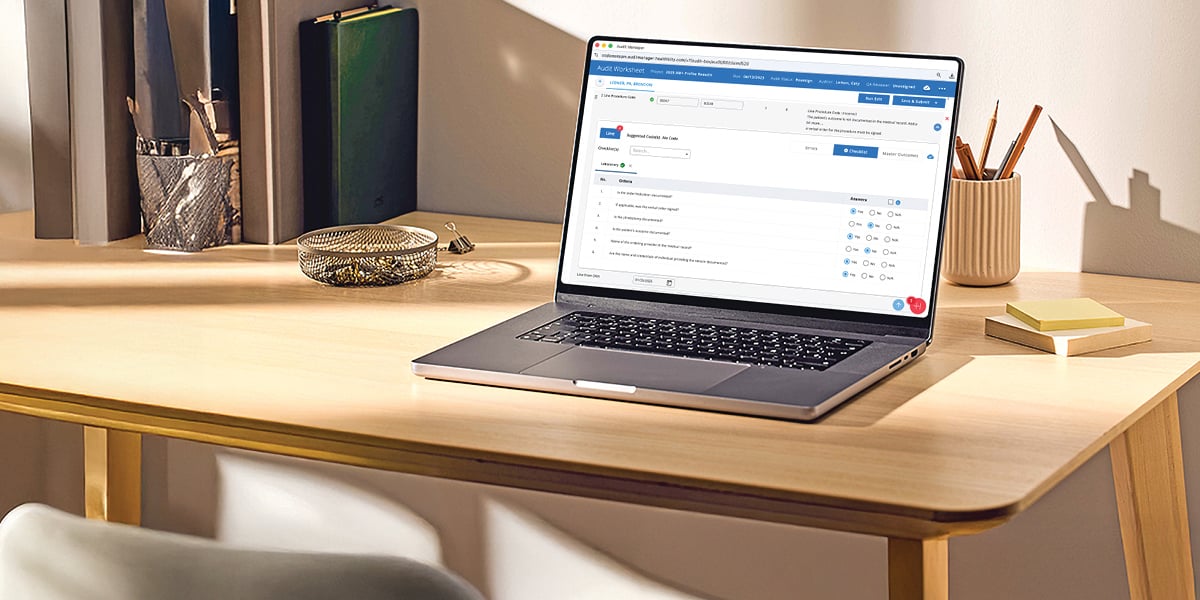
CPT® codes, HCPCS Level II, NCCI edits, ICD-10 — the updates land quarterly, and the compliance exposure lands right along with them. Audit Manager+ is built to handle every code set your organization touches, in one place, without rebuilding your workflow each time the landscape shifts.
The problem with point-in-time coding tools
Most audit tools are built around a single code set or a snapshot in time. When new wound management matrices get HCPCS A codes, when brand-specific J codes appear for epinephrine and vancomycin, when NCCI adds 3,700+ procedure-to-procedure edits in a quarter, or when a new mandatory CMS payment model like TEAM creates an entirely new category of reporting requirements , and those tools require manual intervention to keep pace.
The real risk isn’t missing a single code. It’s that new codes are where bad habits form. High-volume, high-dollar services billed under a new code with no audit in place can compound into months of incorrect claims before anyone catches it. Getting it right from day one (with a workflow built to absorb updates) is the sustainable approach.
What Audit Manager+ handles
Audit Manager+ supports every major code set in a single audit platform. Whether you’re auditing a physician practice, a health system, a DME supplier, or a dental practice, the tool adapts to the code set, not the other way around.
- Professional & Outpatient (CPT®): MDM checklists, time-based billing logic, and documentation gap flagging. Updated to reflect new remote monitoring thresholds, revised E&M codes, and new CPT® additions each cycle.
- HCPCS Level II: For example, Drug J codes including brand-specific epinephrine and vancomycin codes, wound management A codes, compression wraps, urinary catheters, and more — refreshed quarterly alongside CMS releases.
- Hospital inpatient: DRG-based templates with admitting diagnosis, principal DX with present-on-admission indicators, CC/MCC, severity of illness, and ICD-10-PCS codes in a full inpatient workflow.
- Dental and Specialty: CDT codes with oral cavity, quadrant, tooth number, and tooth surface fields. Plus specialty-specific templates for HCC risk, behavioral health, and compliance walk-throughs.
How it works for new and complex codes
When unfamiliar codes enter your audit workflow, Audit Manager+ gives your team what it needs to audit confidently from the start, not after months of trial and error.
- The full code definition surfaces in the audit worksheet so auditors can compare documentation against requirements without leaving the platform.
- Over 65 pre-built documentation checklists trigger automatically based on the code with the ability to create custom rules for codes with unique requirements.
- Documentation gaps auto-generate audit comments, keeping findings consistent and actionable across every auditor on your team.
- A queue dashboard routes work and tracks status across all audit types, so nothing falls through the cracks when multiple code sets are in play at once.
- Date-of-service accuracy is maintained throughout, which is critical when audits or appeals involve claims from prior quarters under different code sets.
Go deeper: recent coding update webinars
These three sessions from Healthicity’s compliance webinar series cover the 2026 code changes in detail — and show exactly the kind of coding environment Audit Manager+ is built to keep pace with.
- CPT® 2026 updates: key additions, revisions, and what they mean
- Includes a live demo of Audit Manager+ across code sets
- Understanding 2026 HCPCS Level II code updates: J codes, A codes, drug-specific additions, and wound management
- A closer look at April’s HCPCS and NCCI updates: Quarterly edits, compliance implications, and operational process
See how Audit Manager+ handles your code sets
Get a personalized demo and see how audit templates, documentation checklists, and quarterly code updates work together in your environment.
Fill out the form below to download this blog post as a pdf.

Questions or Comments?