

Dermatology Compliance Risks: OIG’s Focus on Modifier 25 and Skin Substitutes
 CJ Wolf
Share:


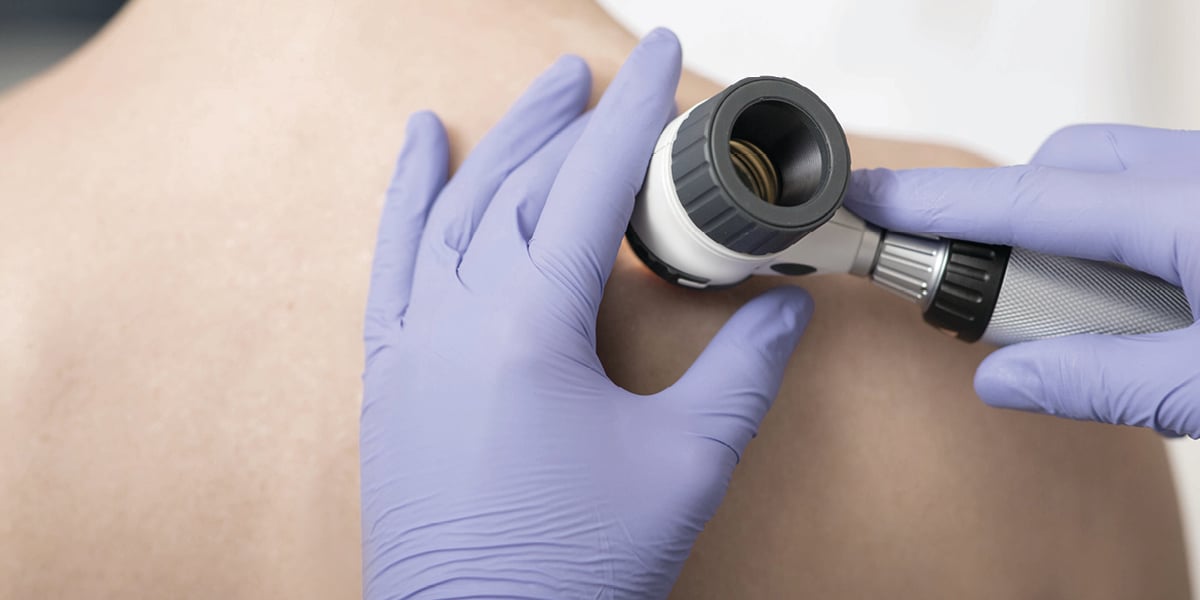
The U.S. Health and Human Services Office of Inspector General (OIG) has their compliance eyes on a couple dermatology issues you need to know about. The first involves medical coding modifier 25 and the second is about skin substitutes.
Modifier 25
Previously, OIG added to their work plan an item titled “Dermatologist Claims for Evaluation and Management Services on the Same Day as Minor Surgical Procedures.”
Through their Office of Audit Services, OIG wants to determine whether dermatologists' claims for Evaluation and Management (E/M) services on the same day of service as a minor surgical procedure were compliant with Medicare requirements. When a claim is submitted with modifier 25 in this scenario Medicare will pay for both the E/M service as well as the procedure. The issue OIG is concerned with is that not all E/M services should be paid on the same day as a procedure, at least according to Medicare and the OIG.
Medicare states they cover an E/M service when the service is “reasonable and necessary for the diagnosis or treatment of illness or injury, or to improve the functioning of a malformed body member.” Generally, Medicare payments for global surgery procedures include payments for necessary preoperative and postoperative services related to surgery when furnished by a clinician/surgeon.
Medicare global surgery regulations define the rules for reporting E/M services with minor surgery and other procedures. In general, E/M services provided on the same day of service as a minor surgical procedure are included in the payment for the procedure. The decision to perform a minor surgical procedure is included in the payment for a minor surgical procedure and must not be reported separately as an E/M service. For Medicare, this is also true even if the patient is a new patient. Their being a new patient, in and of itself, does not automatically equate to reporting a separate E/M service in addition to the procedure.
An E/M service should be billed only on the same day if a surgeon performs a significant and separately identifiable E/M service that is unrelated to the decision to perform a minor surgical procedure. In this instance, the provider should append a modifier 25 to the appropriate E/M code.
The OIG shared that in 2019, about 56% of dermatologists' claims with an E/M service also included minor surgical procedures (such as lesion removals, destructions, and biopsies) on the same day. According to the OIG, this may indicate abuse because the provider may have misused modifier 25 to bill Medicare for a significant and separately identifiable E/M service when only a minor surgical procedure and related preoperative and postoperative services are supported by the patient's medical record.
According to the OIG’s work plan website, the report of their findings is expected to be released sometime in 2025 with report number W-00-21-35868.
To get an idea of what the report might look like, consider looking at their recent report on modifier 25 usage for E/M services on the same day as eye injections (see: https://oig.hhs.gov/reports/all/2025/medicare-payments-for-evaluation-and-management-services-provided-on-the-same-day-as-eye-injections-were-at-risk-for-noncompliance-with-medicare-requirements).
Skin Substitutes
The use of skin substitutes has been on the rise over recent years. This has caught the attention of the OIG. In November of 2024 they added an item to their work plan to examine “Medicare Part B Payments for Skin Substitutes.” (see https://oig.hhs.gov/reports-and-publications/workplan/summary/wp-summary-0000894.asp).
These products can contribute to wound healing and skin redevelopment. Medicare does cover skin substitutes when their use meets Medicare’s ‘reasonable and medically necessary standard.’
Some Medicare Administrative Contractors (MACs) have published local coverage determinations (LCDs) that address the coverage requirements for skin substitutes for the treatment of diabetic foot ulcers and venous leg ulcers. But there are no national or local coverage determinations for other commons wound types such as trauma wounds, post-operative wounds and pressure ulcers.
Because the OIG has seen a substantial increase in Medicare payments for skin substitutes, they plan to review Medicare Part B claims for skin substitutes to identify payments that were at risk for noncompliance with Medicare requirements. They have announced the expected issue date of that work to be in 2026 under report number OAS-25-09-005.
In the meantime, OIG recently published a data review report (OEI-BL-24-00420) in which they concluded that Medicare Part B payment trends for skin substitutes raise major concerns about fraud, waste, and abuse (see https://oig.hhs.gov/reports/all/2025/medicare-part-b-payment-trends-for-skin-substitutes-raise-major-concerns-about-fraud-waste-and-abuse).
In the report, the OIG found that Part B expenditures for skin substitutes provided in non-institutional settings have skyrocketed over the last 2 years, surpassing $10 billion annually by the end of 2024.
Based on their analysis they wrote that several aspects of Part B spending trends raise serious concerns:
- Large increases in the number of patients with skin substitute claims and the amount of product billed for each patient, particularly in home care.
- A massive gap in spending between Part B and Medicare Advantage.
- A steep rise in the cost of individual skin substitutes combined with providers’ propensity to shift to more and more expensive products.
- Fraud schemes that allow bad actors to quickly get paid tens of millions of dollars when billing for just a small number of Part B enrollees. Given the OIG’s significant concerns, they issued the following call to action: “Action is urgently needed to rein in the massive increases in Medicare Part B spending for skin substitutes. OIG’s findings illustrate the critical need for payment reforms that address fraud, waste, and abuse in Medicare skin substitute billing.”
Conclusion:
Given all the oversight responsibilities the OIG has on their plate, it is noteworthy that dermatology and other practices performing skin procedures on the same day as E/M services (i.e., modifier -25) and utilizing skin substitutes are on their radar. Compliance professionals working in these organizations should consider proactively auditing and monitoring of these services.
To download this blog post as a pdf, click the button below.

Questions or Comments?